LOW-NOISE UAV PROPULSION LOW-NOISE UAV PROPULSION

Lower UAV Noise for Sensitive Missions

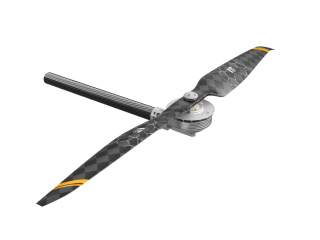
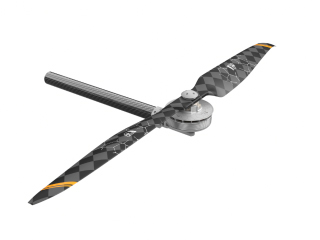
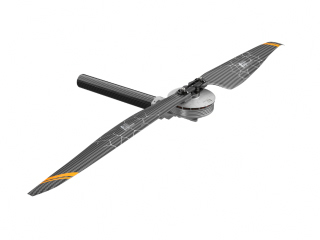
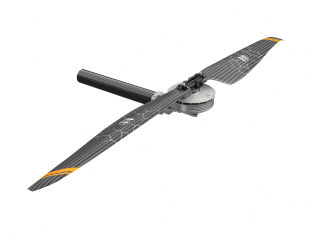
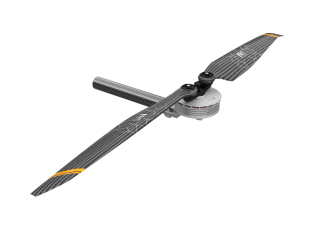
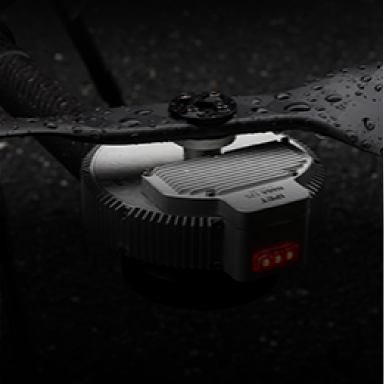
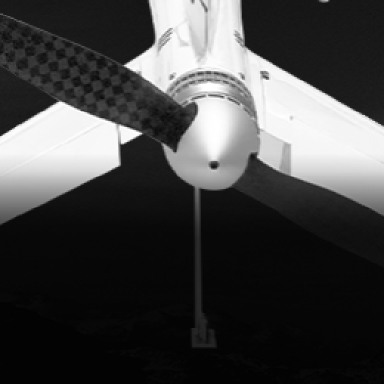
IPET develops integrated motor, ESC, and matched propeller configurations for industrial UAVs operating near people, buildings, wildlife, and other noise-sensitive environments. Low-noise selection focuses on propeller size, operating RPM, thrust loading, control smoothness, and airframe interaction rather than relying on a single component rating.

LOW-NOISE UAV PROPULSION

Noise Must Be Evaluated at the Aircraft Level

Motor, ESC, and propeller behavior all affect the acoustic signature, but installation, frame resonance, payload, altitude, and operating point also matter. IPET provides system configurations and reference test data to help engineers narrow the design before full-aircraft acoustic validation.

Urban road and traffic infrastructure viewed from an aerial inspection route

Urban Infrastructure and Traffic Inspection

Mission Challenge

Bridge, road, rail, and traffic-monitoring missions often operate close to buildings, vehicles, and pedestrians. High tonal or propeller noise can trigger complaints, restrict flight windows, and make routine inspection harder to deploy in populated areas.

IPET Design Response

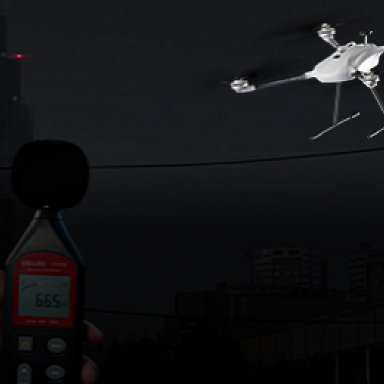
I7 has reference noise data of 65–67 dB measured at 5 m under the specified test setup. Its 30-inch propeller and integrated FOC ESC configuration provide a practical starting point for urban inspection platforms, while final aircraft noise must still be validated after installation.

65–67 dB
I7 Reference Data
5 m
Measurement Distance
30"
Matched Propeller
Emergency response vehicles operating near a wildfire at dusk

Public Safety and Emergency Response

Mission Challenge

Public-safety aircraft may hover near responders, vehicles, temporary command posts, or residential areas. Excessive propulsion noise can interfere with communication, increase public disturbance, and reduce acceptance of repeated UAV operations.

IPET Design Response

For hover-heavy missions, IPET helps select a larger, lower-RPM propeller configuration that delivers the required hover thrust without operating unnecessarily close to maximum speed. Integrated FOC control supports smoother throttle response, but final acoustic performance must be checked on the complete airframe.

Lower RPM
Propeller Strategy
FOC
Smooth Throttle Control
Aircraft Test
Final Validation
Conservation UAV flying over a mountain wildlife habitat

Wildlife Conservation and Environmental Research

Mission Challenge

Wildlife monitoring and ecological surveys require the aircraft to collect data without causing unnecessary stress or behavioral disruption. Propulsion noise can alter animal movement, reduce observation quality, and limit how close or how long the UAV can operate.

IPET Design Response

For ecological missions, propulsion should be evaluated together with stand-off distance, flight altitude, route planning, and time spent hovering. I Series supports efficient large-propeller multirotor configurations that can reduce the need for high-RPM operation while extending observation time.

Large Prop
Lower-RPM Potential
Longer
Observation Time
Full Aircraft
Acoustic Validation

LOW-NOISE UAV PROPULSION

Compare Propulsion Options for Low-Noise Platform Design

Use this matrix to compare candidate configurations by MTOW, voltage, propeller size, and platform type. The 65–67 dB reference applies to I7 at 5 m under its test conditions and should not be generalized to every model. Final selection requires complete-aircraft testing at the intended payload, RPM, altitude, and flight mode.

LOW-NOISE UAV PROPULSION

Engineering Support for Low-Noise Platform Design

IPET helps UAV teams evaluate acoustic targets together with MTOW, hover thrust, propeller size, airframe clearance, operating RPM, resonance risk, and mission profile before full-aircraft testing.

IPET Blog &
Insights

Read technical articles on UAV acoustics, propeller sizing, integrated propulsion design, operating-point efficiency, resonance, and practical platform validation.

Visit Blog

Low-Noise Consultation

Share your aircraft type, MTOW, target sound requirement, hover load, propeller limits, operating altitude, and mission profile. Our team can help narrow a suitable starting configuration.

Contact Us

Downloads & Documents

Access specifications, thrust-efficiency curves, reference noise data, technical drawings, operating guides, and STEP files for propulsion comparison and prototype design review.

Downloads